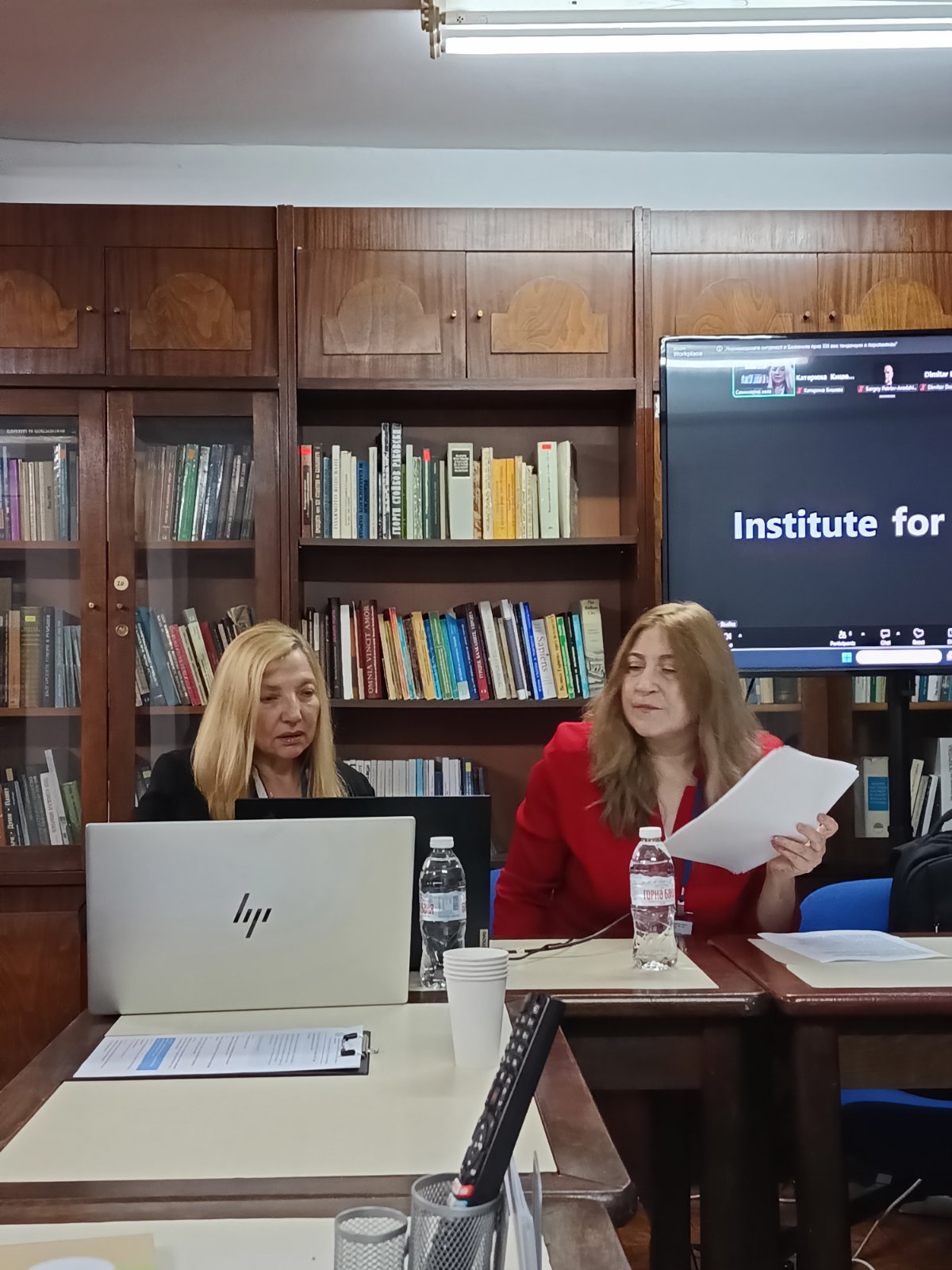
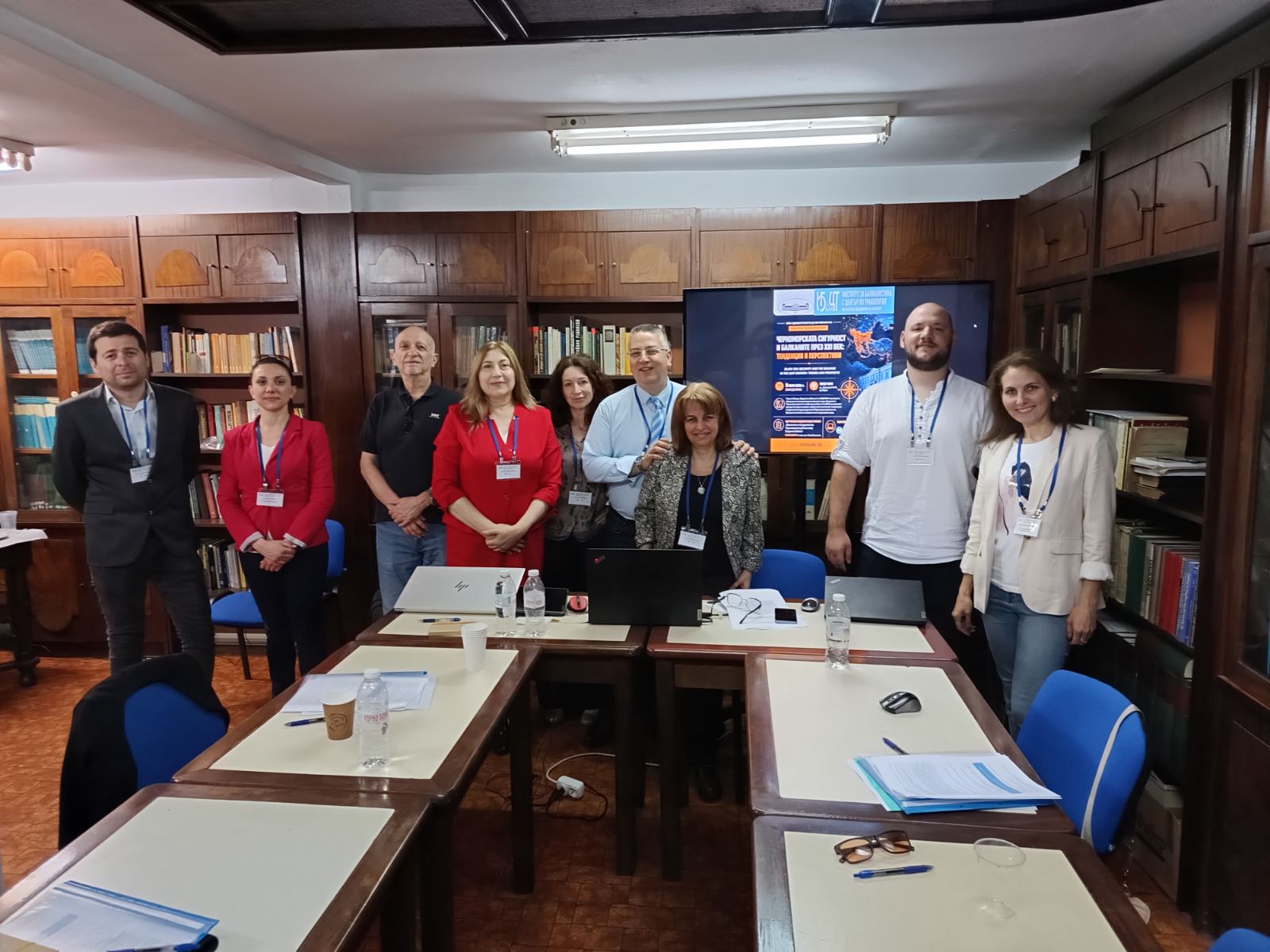
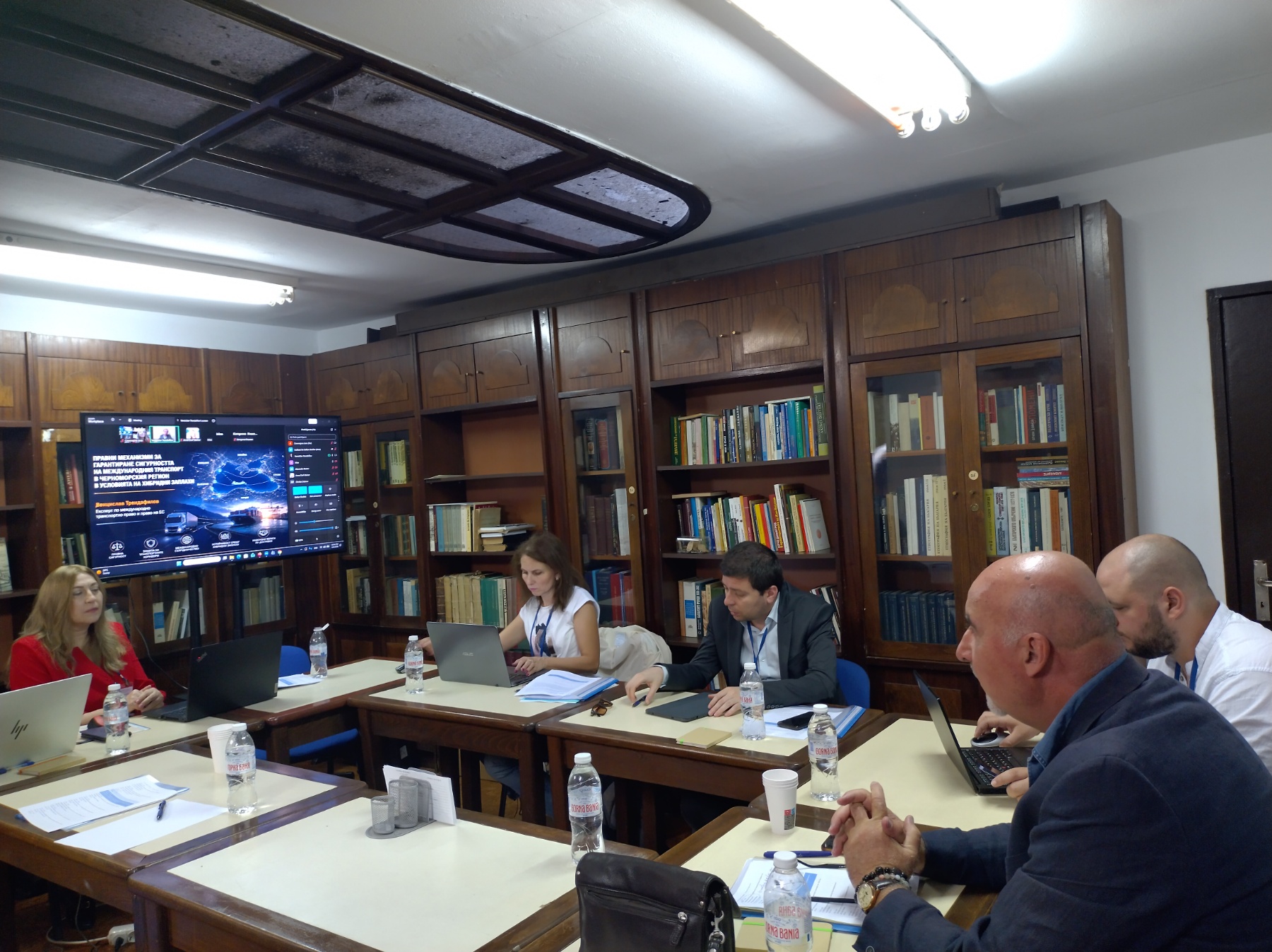
 On June 8, 2026, the scientific conference on the topic “Black Sea Security and the Balkans in the 21st Century: Trends and Prospects" was held at the Institute of Balkan Studies with a Center for Thracology "Prof. Alexander Fol" - BAS (IBSCT-BAS). The forum was organized in implementation of the research project “The Balkans and Security in the Black Sea Region after the Cold War” led by Prof. Dr. Nadya Boyadzhieva from IBSCT-BAS, in a hybrid format - in person and online via Zoom.
The conference was opened with a welcome address by Prof. Dr. Rumyana Preshlenova, Director of IBSCT-BAS, who emphasized the relevance of the topic and noted the diversity of institutions from which the participants come. Corresponding member Prof. Dr. Alexander Kostov, Chairman of the Scientific Council of the Institute and President of the International Association of South-East European Studies (AIESEE), emphasized the importance of developing this topic specifically at IBSCT and wished the forum a successful outcome. Prof. Boyadzhieva herself set the tone for the scientific event by presenting a plenary report on the security of the Black Sea region in the context of regional security after the end of the Cold War.
The conference program included three thematic sections. Section 1 – “The Black Sea Region and Its Strategic Importance: Historical Context and Contemporary State” – which presented reports on historical security models in the region from Antiquity to the 19th century, the strategic partnership between Azerbaijan and Bulgaria in energy security, the Montreux Convention and contemporary geopolitical conflicts, as well as legal mechanisms for international transport security in the face of hybrid threats.
Section 2 was dedicated to "The Security of the Black Sea Region: Policies and Strategies of the Balkan States and the European Union" and included reports on the EU initiative "Black Sea Synergy" (Black Sea Synergy), the EU's strategic approach to the region, environmental security and sustainable development, the Republic of Macedonia's transport projects with an emphasis on Corridor 8, the Turkish Black Sea strategy of "dual balancing", as well as Romania's transformation from a strategic periphery to a frontline zone after the annexation of Crimea.
In Section 3 – "Challenges to Black Sea Security and the Position of the Black Sea States, the EU and NATO: Trends, Strategies and Prospects" – attention was focused on the consequences of the war between Russia and Ukraine for the Black Sea, the threats arising from the conflict in the Persian Gulf, NATO's response to security challenges in the region, as well as the technological transformation of military operations and the role of modern combat platforms.
The conference was attended by scholars from the "Contemporary Balkans" Section of IBSCT-BAS, doctoral students from the specialized lecture course "Security in the Black Sea Region" at the BAS Training Center from IBSCT, from the Institute of State and Law - BAS, the Institute for Historical Studies - BAS, VTU "St. St. Cyril and Methodius", SU "St. Kliment Ohridski", PU "Paisiy Hilendarski" and UNWE. Each section ended with a lively discussion between the participants.
The conference ended with a summary of the results and an announcement of future project activities, presented by Prof. Dr. Nadya Boyadzhieva. Among them, the work on a collection of articles, further developing the reports of the event, as well as a larger international scientific conference on the topic, stands out.